The weird economics of airport rental cars
Most of us don’t give airport rental cars a second thought.
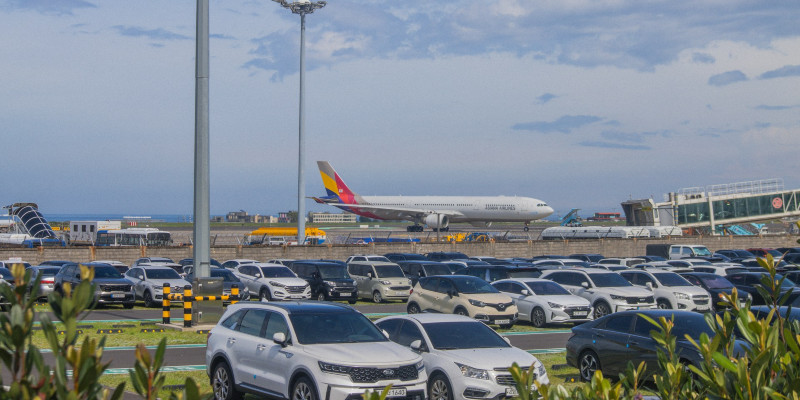
You land after a long flight, join a queue, sign a few forms you’ve barely read, and are handed the keys to a silver crossover that’s practically indistinguishable from the 500 others parked around it.
A week later, it’s returned with a slightly sandy boot and half a packet of mints in the centre console, and you move on with your life.
But behind this remarkably ordinary experience lies a surprisingly strange business.
Airport rental cars aren’t really just cars. They’re financial assets, logistical puzzles and, occasionally, giant gambles on human behaviour.
Why are airport rental lots full of the same cars?
The obvious answer is that rental companies buy in bulk. The more interesting answer is that they buy cars for reasons that most private motorists never consider.
When choosing a car, you might care about styling, performance or whether the infotainment system is any good. Rental companies care about different things entirely.
Can it survive being driven by hundreds of different people every year?
Are replacement parts cheap and widely available?
Will it retain enough value when sold?
Can staff explain the controls to a jet-lagged customer in less than thirty seconds?
A rental company’s ideal vehicle isn’t necessarily the one customers love most. It’s often the one that causes the fewest headaches.
That’s why rental fleets tend to be dominated by sensible hatchbacks, midsize SUVs and family saloons rather than anything particularly exotic. Excitement is expensive. Predictability pays.
The airport advantage
Rental companies can charge more at airports than in many city-centre locations, and for a simple reason: convenience.
After a six-hour flight, most travellers are willing to pay a little extra to avoid dragging luggage across town in search of a cheaper deal.
This makes airports some of the most valuable rental locations in the world.
Airports know this, too. Rental companies often pay substantial fees for the privilege of operating on-site.
The rental desk isn’t just occupying a convenient corner of the arrivals hall; it’s part of a much larger commercial ecosystem designed to generate revenue from travellers at every stage of their journey.
From parking charges to duty-free shopping, airports have become experts at monetising convenience. Rental cars are no exception.
Predicting the future, one flight at a time
Perhaps the strangest part of the business is forecasting demand.
A rental company needs enough cars to satisfy customers during peak periods, but not so many that thousands of vehicles sit idle when demand falls.
That sounds straightforward until you consider everything that affects bookings:
- Flight schedules
- School holidays
- Major sporting events
- Weather forecasts
- Conference seasons
- Local festivals
Even airline route changes can have a significant impact.
A major airport might see demand surge unexpectedly because a low-cost airline launches new routes, while a bad weather forecast could suddenly increase bookings from travellers who decide against public transport.
Modern rental companies use sophisticated software to predict these fluctuations, but they’re still making educated guesses. Too few cars means lost revenue. Too many means expensive assets sitting in a car park earning nothing.
The depreciation game
Here’s the really counterintuitive part.
Rental companies aren’t simply in the business of renting cars. In many ways, they’re in the business of managing depreciation.
The purchase price of a vehicle is only the beginning of the calculation.
What matters is the difference between what the company pays for the car and what it can eventually sell it for.
Imagine two vehicles that cost roughly the same to buy. One loses value rapidly, while the other holds its worth surprisingly well. Even if they generate similar rental income, the second car may prove significantly more profitable.
This is why residual values are so important.
For rental firms, a car isn’t just transport. It’s an investment that happens to carry tourists to the beach.
The curious life of an ex-rental car
Eventually every rental vehicle reaches the end of its fleet career.
Contrary to popular belief, many are retired surprisingly early. Some spend only a year or two in service before being sold.
This creates a steady stream of relatively new used cars entering the market.
Mention “ex-rental” to some buyers and they’ll immediately recoil. The stereotype is that rental cars spend their lives being driven hard by people who have little reason to be gentle with them.
There is probably some truth in that.
On the other hand, rental companies are usually meticulous about servicing and maintenance. A breakdown inconveniences customers and costs money, so fleet operators have a strong incentive to keep vehicles in good condition.
The reality is often more nuanced than the reputation suggests.
Why so many cars are white
Take a look around a large rental lot and you’ll notice another pattern.
There are an awful lot of white, silver and grey cars.
Part of this is because neutral colours tend to appeal to a wider range of customers. More importantly, they’re easier to sell on.
When a vehicle eventually leaves the fleet, the company wants as many potential buyers as possible to be interested. Bright purple might attract a devoted fan. White tends to attract everyone else.
It’s not exciting, but then neither is depreciation. That’s kind of the point.
More like airlines than dealerships
The longer you look at the rental industry, the less it resembles traditional motoring and the more it resembles the airline business.
Both industries rely on complex forecasting.
Both manage large fleets of expensive assets.
Both depend on keeping those assets in use as much as possible.
And both operate on surprisingly thin margins given the scale of the operation.
The next time you collect a rental car at an airport, it’s worth remembering that the anonymous crossover waiting in Bay 42 represents thousands of calculations involving finance, logistics, forecasting and resale values.
To you, it’s simply transport for a few days.
To the rental company, it’s a carefully managed investment that’s expected to earn its keep long before it eventually appears on a used-car forecourt.
Not bad for a car most people can’t remember the name of by the time they’ve reached the hotel.