Why hydrogen cars haven’t taken off
Hydrogen has been called the “fuel of the future” for over two decades. It’s the most abundant element in the universe, produces nothing but water vapour at the tailpipe, and can be refuelled in minutes – just like petrol.
On paper, it sounds like the perfect replacement for fossil fuels.
So why aren’t hydrogen cars everywhere?
Despite decades of investment, bold promises, and serious backing from major manufacturers, hydrogen-powered passenger cars remain a niche curiosity rather than a mainstream solution.
To understand why, we need to look at where it started, who tried to make it work, and why it ultimately lost ground to battery electric vehicles (BEVs).
The Long History: Hydrogen Came First
Hydrogen isn’t a new idea – it actually predates the modern petrol car by decades.
The first hydrogen-powered vehicle dates all the way back to 1807, nearly 80 years before Karl Benz’s petrol-powered car. By 1860, the Hippomobile – a hydrogen-powered internal combustion vehicle – had reportedly sold hundreds of units.
Fast forward to 1966, and General Motors unveiled the Electrovan, widely considered the first modern hydrogen fuel cell vehicle. It was groundbreaking but wildly impractical – filling the van with experimental equipment and offering no real commercial viability.
Interest surged again during the 1970s oil crisis, when automakers began exploring alternatives to petrol. Hydrogen was one of several ideas tested, but none made it beyond experimental stages.
The real momentum came in the late 1990s and early 2000s, when major manufacturers – including Toyota, Honda, BMW, and Mazda – began serious development programs. This era saw a wave of prototypes, concept cars, and early production trials, all promising a hydrogen-powered future.
For a moment, it looked like hydrogen might genuinely become the next big thing.
The Famous Cars That Tried
BMW’s Hydrogen Journey
BMW has been one of the most persistent advocates of hydrogen technology. Its journey began with the E38 750hL in 2000, followed by the Hydrogen 7 in 2006 – a limited-production luxury saloon capable of running on both petrol and hydrogen.
By 2008, BMW refined the concept into a mono-fuel hydrogen vehicle. More recently, it introduced the i Hydrogen NEXT concept in 2019, followed by the iX5 Hydrogen in 2024, which remains in testing today.
Despite decades of effort, BMW has yet to bring a hydrogen passenger car to full-scale production.
Honda FCX Clarity (2008–2015)
Honda was one of the first to put hydrogen cars into customers’ hands with the FCX Clarity. However, it was only available via lease in select markets like California and Japan.
While technologically impressive, its limited availability and reliance on scarce infrastructure meant it never reached mass adoption.
Toyota Mirai (2014–Present)
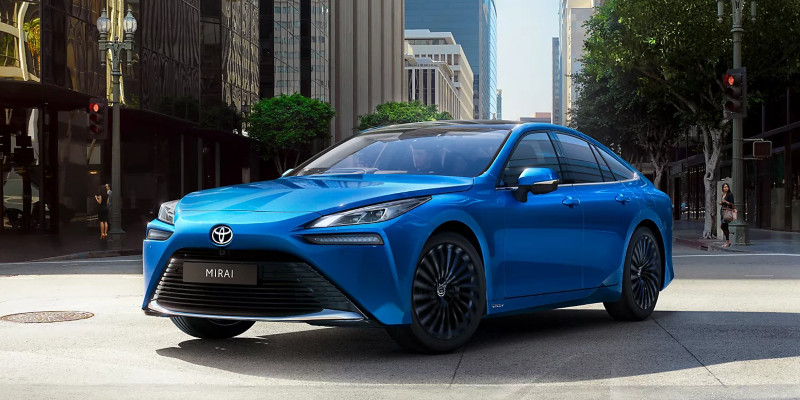
The Toyota Mirai is perhaps the most famous hydrogen car ever made—and the first mass-produced fuel cell vehicle.
But it came at a cost. Toyota reportedly lost around $100,000 per car initially. Even with improvements, sales have remained low. By 2024, global sales had dropped to just 1,702 units.
Hyundai ix35/Tucson FCEV → Nexo
Hyundai has arguably seen the most success with hydrogen through the ix35/Tucson FCEV and its successor, the Nexo.
By 2025, the Nexo accounted for over half of all hydrogen car sales globally. However, the vast majority of these were sold in South Korea—heavily supported by government subsidies.
The Casualties
Not every manufacturer stuck it out:
- Honda Clarity – discontinued in 2021
- Mercedes F-Cell – quietly abandoned
- GM HydroGen4 – shelved
- Hyvia (Renault/Plug Power) – liquidated in February 2025
- Nikola – bankrupt in February 2025
- Stellantis – exited hydrogen passenger cars in July 2025
The list of casualties tells a clear story: even major players struggled to justify continued investment.
Where We Are Now
The numbers paint a stark picture.
By the end of 2022, around 70,200 hydrogen fuel cell vehicles had been sold globally. In comparison, there were 26 million plug-in electric vehicles on the road.
In the US in 2023, just 3,143 hydrogen cars were sold – versus 380,000 BEVs. Globally in 2024, hydrogen car sales fell below 9,000 units, down from 10,000 the year before.
Infrastructure is an even bigger issue. The US has around 55 hydrogen stations, nearly all in California. Meanwhile, there are over 68,000 EV charging stations nationwide.
In the UK, hydrogen refuelling is almost non-existent for the public. Even California – once the global leader – has struggled, with only 54 of a promised 200 stations built by 2025. Shell even closed all its hydrogen stations for passenger vehicles in the state in early 2025.
Then there’s cost. A Toyota Mirai sits around £64,000, compared to roughly £45,700 for a comparable BEV. Fuel is even worse – hydrogen in California reached $25–35 per kg, making it more expensive per mile than both petrol and electricity.
Why It Failed: The Five Fundamental Problems
1. The Chicken-and-Egg Problem
Hydrogen faces a classic infrastructure dilemma: no stations means no cars, and no cars means no stations.
EVs had the same challenge – but solved it by leveraging existing electrical infrastructure. You can charge a car at home. Hydrogen requires entirely new, highly specialised refuelling stations costing £800,000–£1.5 million each.
2. Energy Efficiency Is Terrible
Hydrogen is fundamentally inefficient compared to batteries.
- Battery EVs: ~90% efficient
- Hydrogen vehicles: ~30–40% efficient
That means it takes roughly three-times more electricity to power a hydrogen car than a battery electric one over the same distance. In a world focused on energy efficiency, that’s a major disadvantage.
3. Production Is Dirty and Expensive
Around 95% of hydrogen today is produced from natural gas, which generates CO₂. So while the car itself is clean, the fuel often isn’t.
“Green hydrogen” (made using renewable electricity) exists, but it’s expensive and energy-intensive. It also requires rare and costly materials like platinum and iridium.
At that point, the obvious question arises: if you already have clean electricity, why not just charge a battery directly?
4. The Subsidy Dependency
Hydrogen cars rely heavily on government support.
Take the Hyundai Nexo in South Korea: it retails for around $53,000, but buyers often pay just $26,000–$33,000 thanks to subsidies.
Compare that to EV incentives, which are typically far smaller. Remove the subsidies, and hydrogen sales collapse. It’s less a functioning market—and more a policy-driven experiment.
5. EVs Simply Won
Perhaps the biggest reason hydrogen failed is timing.
While hydrogen struggled with infrastructure and cost, EVs rapidly improved:
- Battery costs dropped
- Charging networks expanded
- Range increased significantly
By 2020, most automakers had already shifted focus away from hydrogen passenger cars. EVs didn’t just compete – they dominated.
Where Hydrogen Might Actually Work
Hydrogen isn’t useless – it’s just been applied to the wrong segment.
It makes far more sense in heavy transport, where batteries struggle:
- Long-haul trucks
- Shipping
- Aviation
- Rail
These sectors benefit from hydrogen’s higher energy density and faster refuelling. They also operate from centralised depots, reducing the need for widespread infrastructure.
Hydrogen also has strong potential in industrial applications, including:
- Steel production
- Chemical manufacturing
- Grid-scale energy storage
Even companies like Toyota, Hyundai, and BMW are increasingly shifting their hydrogen focus toward commercial vehicles rather than passenger cars.
The Bottom Line
Hydrogen isn’t bad technology – it’s just solving the wrong problem.
For passenger cars, batteries have already won. They’re more efficient, cheaper to run, easier to support with infrastructure, and backed by massive global investment.
The real lesson isn’t that hydrogen doesn’t work – it’s that timing, economics, and practicality matter just as much as innovation.
Decades of effort and billions in funding went into making hydrogen cars viable. But while that was happening, EVs quietly improved, scaled, and took over.
Hydrogen didn’t fail because it couldn’t work – it failed because something better got there first, and closed the window of opportunity.