The truth about “breaking in” a new car
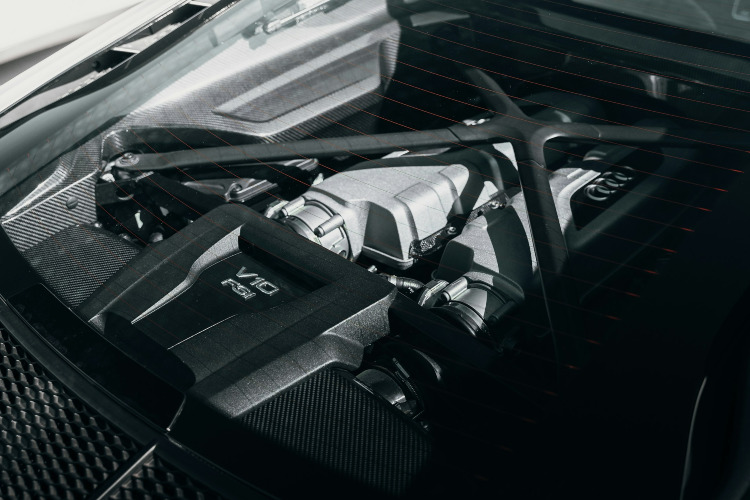
Ask 10 people about breaking in a new car and you’ll get 10 different answers.
Your grandfather swears you need to baby it for the first thousand miles. Your mate down the pub says it’s complete nonsense. The dealer shrugs and says “just drive it normally.”
Even the manufacturers can’t seem to agree.
So what’s the truth? Is breaking in a new car an essential ritual or an outdated myth from the days of carburetors and leaded petrol?
The answer, frustratingly, is: it’s complicated.
Both sides are (sort of) right
Here’s the thing – modern engines ARE built to far tighter tolerances than they were 30 or 40 years ago. Manufacturing has come on leaps and bounds.
But that doesn’t mean break-in is dead. It’s just evolved.
The elaborate rituals your grandfather followed? Probably overkill. But driving your brand new car like you stole it from the moment you leave the dealership? Also probably not ideal.
The truth lies somewhere in the middle – and it depends entirely on who made your car.
What’s actually happening (the science bit)
When an engine is first assembled, not everything is perfectly smooth. And that’s intentional.
The piston rings need to seat properly against the cylinder walls. Those surfaces aren’t mirror-smooth – they have a deliberate roughness that allows oil to adhere and creates the seal that prevents combustion gases from escaping.
During the first few hundred miles, those surfaces are essentially polishing themselves to fit together perfectly. It’s like breaking in a pair of leather boots that mold to your feet.
Metal particles appear in the oil during this process – oil analysis proves it’s happening. That’s normal. It’s the engine wearing into its final, ideal state.
The question isn’t whether this process happens. It’s whether you need to do anything special to help it along.
The manufacturer confusion
This is where it gets properly confusing.
Some manufacturers say break-in isn’t necessary. Others have elaborate procedures. Some don’t mention it at all in the owner’s manual but recommend it verbally.
Let’s look at some examples:
Ford Mustang (2025): Very clear. “Your vehicle requires a break-in period. Drive your new vehicle at least 100 miles before performing extended wide open throttle maneuvers and at least 1,000 miles before operating your vehicle at high speeds or track conditions.”
BMW: States that “doing an engine break-in used to be a standard procedure with new cars. And it’s still the case that you should avoid running the engine at high RPM for the first 1,300 miles.”
Mazda: Contradictory. Some manuals say “no special break-in is necessary, but a few precautions in the first 1,000 km (600 miles) may add to the performance, economy, and life of the vehicle.” Others don’t mention it at all. Some dealers say Mazdas don’t require break-in. It’s a mess.
Chevrolet Corvette: Takes it seriously enough that the tachometer actually changes at 500 miles – the redline increases from 4,500 RPM to 6,500 RPM once the initial break-in is complete. The car literally tells you when you’re allowed to push harder.
Subaru: Indicates a break-in period for the 2025 Outback.
Volvo: Some sources say no break-in needed at all.
See the problem? Even within the same brand, recommendations vary by model and year.
The result? Total confusion for buyers.
What how do you actually break-in a new car?
Given the confusion, here’s the sensible middle ground that won’t hurt and might help:
For the first 500-1,000 miles:
- Keep the engine below 4,000 RPM. No need to be obsessive about it, but avoid bouncing off the rev limiter.
- Vary your speeds. Don’t spend an hour droning along the motorway at 70mph in sixth gear. Change gears, vary your speed, mix up your driving.
- Avoid full-throttle acceleration from standstill. A quick overtake is fine. Launching like you’re at Santa Pod is not.
- Let the engine warm up properly before driving hard. This applies for the life of the car, but especially during break-in.
- Don’t tow heavy loads. Some manufacturers explicitly ban this, others don’t mention it. Better safe than sorry.
Think of it as easing into a new relationship: you don’t propose on the first date – and you don’t redline your new car in the dealer car park.
The key is mechanical sympathy. You’re not being asked to drive at 30mph for a month. Just don’t thrash it.
It’s not just the engine
Here’s what often gets forgotten: other components need breaking in too.
Brakes
Your brake pads and rotors need 200-300 miles to “bed in” properly.
During this process, a thin layer of brake pad material transfers onto the rotor surface. This creates the smooth, even contact that gives you optimal stopping power.
For the first few hundred miles, avoid hard braking where possible. Emergency stops are obviously fine – but don’t repeatedly slam on the brakes from high speed just for fun.
Tyres
New tyres come with a factory mold lubricant that needs to wear off. Until it does, you’ve got reduced traction – especially in the wet.
Give them 300-500 miles to scrub in properly. Be extra careful in wet conditions during this time.
Transmission
Less talked about but still relevant, especially for manual gearboxes and dual-clutch transmissions.
Gears and clutch plates need time to mesh properly. Some sources say 500 miles, others say just drive normally.
The EV exception
If you’ve bought an electric vehicle, the break-in story changes a bit.
No piston rings = less concern about engine break-in. That’s the obvious part.
But tyres and brakes still need breaking in. And because EVs are heavier than equivalent petrol cars and deliver instant torque, they’re actually harder on both.
Pay extra attention to tyre break-in if you’ve gone electric. That instant torque can catch you out on greasy roads with brand new rubber.
Still worth checking your owner’s manual though. Some manufacturers have specific recommendations even for EVs.
The early oil change debate
Old-school wisdom says change the oil at 1,000 miles to flush out metal particles from the break-in process.
Modern wisdom says it’s unnecessary. Oil filters are good enough to handle it, and factory-fill oil is fine.
So who’s right?
Honestly? Probably the modern camp. Oil analysis shows metal particles are present during break-in, but filters handle them fine. Most manufacturers don’t recommend an early change.
That said, many enthusiasts still do it “just in case” – especially if they’re planning to keep the car long-term.
It won’t hurt. It probably won’t help either. But it might give you peace of mind, and peace of mind is worth something.
If you’re leasing or planning to trade in after three years? Skip it. If you’re planning to keep the car for ten years and 150,000 miles? An early oil change is cheap insurance.
What happens if you ignore it?
Honest answer? Probably nothing dramatic.
You’re not going to blow your engine by accelerating hard once or twice during the break-in period. Modern engines are tougher than that.
But over the long term, there might be consequences:
- Slightly higher oil consumption
- Reduced performance compared to what the engine could have achieved
- Potentially shorter engine life (though we’re talking 150,000 miles instead of 175,000)
Here’s the reality check: most people don’t follow break-in procedures religiously, and their cars still last 150,000+ miles anyway.
Modern engineering has made cars incredibly forgiving.
But if you’re the type who plans to keep your car for a decade, a little mechanical sympathy in those first few hundred miles costs nothing and might just add years to your engine’s life.
The bottom line: A pragmatic approach
Step 1: Check your owner’s manual. Actually read it. It’s in there somewhere.
Step 2: If it mentions a break-in procedure, follow it. Even if you think it’s unnecessary, it keeps your warranty valid.
Step 3: If your manual doesn’t mention break-in at all, just drive normally but not aggressively for the first 500-1,000 miles.
Step 4: Avoid sustained high RPM for the first few hundred miles. Quick bursts are fine. Sitting at 6,000 RPM for five minutes is not.
Step 5: Remember the brakes and tyres need breaking in too. Give them a few hundred miles.
Think of break-in as insurance. It costs you nothing except a bit of patience. It might not make a massive difference, but it certainly won’t hurt.
And who knows? Maybe your engine will thank you at 175,000 miles when it’s still running sweet while your mate’s thrashed example is burning a quart of oil every month.
The real truth
Breaking in a new car isn’t the elaborate ritual it once was, but it’s not complete nonsense either.
Modern engineering has made cars more forgiving. Tighter tolerances mean less need to “settle in.” Better oils mean less wear during the process.
But the fundamental physics hasn’t changed. Metal still rubs against metal. Surfaces still need to mate properly. A little mechanical sympathy still matters.
The good news? You don’t need to drive at 30mph in third gear for a month. Just avoid thrashing it for the first few hundred miles, vary your speeds, and let things warm up properly.
It’s not rocket science. It’s just common sense dressed up as car maintenance.