The secret lives of test cars
Most cars spend their lives doing fairly predictable things.
They carry families to school, commuters to work and holidaymakers to the coast. Some become cherished classics. Others end up quietly rusting away behind garages.
Test cars are different.
Before a new vehicle reaches showrooms, manufacturers build hundreds – sometimes thousands – of prototypes, development vehicles and engineering test mules.
These cars travel millions of miles, endure some of the harshest conditions imaginable and play a crucial role in shaping the vehicles we eventually buy.
Yet most people never see them.
And once their work is done, many seem to disappear entirely.
So what actually happens to test cars after the cameras stop rolling and the new model goes on sale?
The answer is stranger than you might think.
Not all test cars are created equal
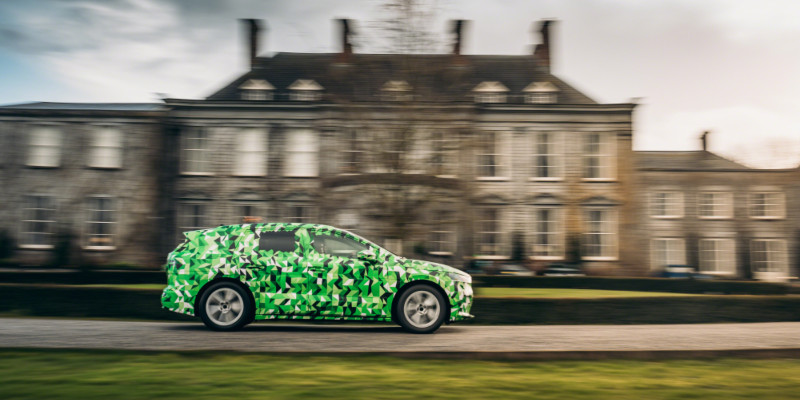
When people imagine a test car, they often picture a heavily camouflaged prototype spotted by photographers on a mountain road.
Those certainly exist, but they’re only one piece of the puzzle.
Some development vehicles are built to test specific systems, such as brakes, suspension or electronics. Others are used for crash testing. Some spend months in extreme heat, while others are sent to freezing locations near the Arctic Circle.
Manufacturers also build “mules” – early test vehicles that hide new mechanical components beneath the bodywork of an existing model.
To the casual observer, they look ordinary, but to an engineer, they’re often the first glimpse of a future car.
The hardest-working cars you’ll never own
A normal vehicle might cover 10,000 miles a year – a test car can do that in a matter of weeks.
Manufacturers deliberately subject development vehicles to conditions that most owners will never encounter.
They drive over rough surfaces for thousands of miles to identify rattles and weaknesses.
They repeatedly slam doors, boots and bonnets.
They test vehicles in deserts, mountains and frozen landscapes.
Some are run around proving grounds for months at a time, often by drivers whose entire job is finding things that break.
It’s not glamorous work, but it’s essential.
Every annoying squeak that never reaches production, every electrical fault fixed before launch and every suspension component redesigned after testing is usually the result of countless hours spent punishing prototype vehicles.
The camouflage industry
One of the stranger aspects of modern vehicle development is the effort manufacturers make to hide their work.
Camouflage wraps have become increasingly sophisticated over the years.
Early prototypes were often disguised with crude body panels and fake headlights, whereas today’s test cars frequently wear intricate patterns designed to distort shapes and confuse cameras.
The goal isn’t necessarily to make the vehicle invisible – it’s to make it difficult to understand exactly what you’re looking at.
Entire industries now exist to support automotive secrecy, producing specialist wraps, covers and disguises for manufacturers determined to keep their latest designs under wraps for a few more months.
Why most test cars never become classics
Here’s the part that disappoints many enthusiasts: a large number of development vehicles are never sold to the public.
There are several reasons for this.
Many contain experimental components that don’t meet production standards, while others use temporary software or bespoke engineering solutions that would be impractical to maintain.
In some cases, manufacturers simply don’t want proprietary technology entering the public domain.
As a result, numerous test vehicles are dismantled once their development work is complete.
For automotive enthusiasts, this can feel a little tragic.
Some of the most important cars ever built disappear without anyone outside the company ever driving them.
The lucky survivors
Not every test car meets that fate, as some manage to find their way into company museums, while others are retained for engineering reference.
A select few become part of historic collections, meanwhile, helping document the development of significant vehicles.
Occasionally, though, development cars do escape into private ownership.
These vehicles often become fascinating pieces of automotive history because they reveal details of the design process that production models cannot.
You aren’t just looking at the finished product.
You’re looking at the mistakes, compromises and experiments that came before it.
The secret world of automotive photography
The existence of test cars has also created an unusual profession: the automotive spy photographer.
For decades, photographers have travelled to proving grounds, mountain passes and remote roads hoping to capture images of future vehicles before they’re officially revealed.
Manufacturers dislike this – and readers love it.
Entire websites and magazines have built audiences around speculative images and prototype sightings.
In a curious way, test cars exist in a space between secrecy and publicity. Manufacturers want to keep details hidden, but sightings also help generate anticipation for upcoming models.
Everyone pretends not to enjoy the game, while continuing to play it.
The ghosts behind every new car
The next time a manufacturer unveils a new vehicle, it’s worth remembering that the finished product represents only a fraction of the story.
Behind every launch are countless prototypes, development vehicles and engineering experiments that never appear in brochures.
Some were destroyed.
Some were dismantled.
Some are hidden away in warehouses and company collections.
A few may still be running laps of test tracks long after the public has forgotten the model they helped create.
Most people will never see these vehicles, yet every production car owes something to them.
They’re the hidden workforce of the automotive world: anonymous, heavily disguised and often destined to disappear without recognition.
Not bad for cars that were never really meant to be seen in the first place.